EXPERIENCE 01
Leadership Under Pressure
For leaders who need to maintain clarity, presence and decision quality when urgency, ambiguity or business pressure increases.
Black Belt Vision creates immersive leadership experiences for managers, executive teams and organizations that need more than another training session. Participants work through pressure, alignment, decision-making and execution in ways they can feel, examine and carry back into the business.
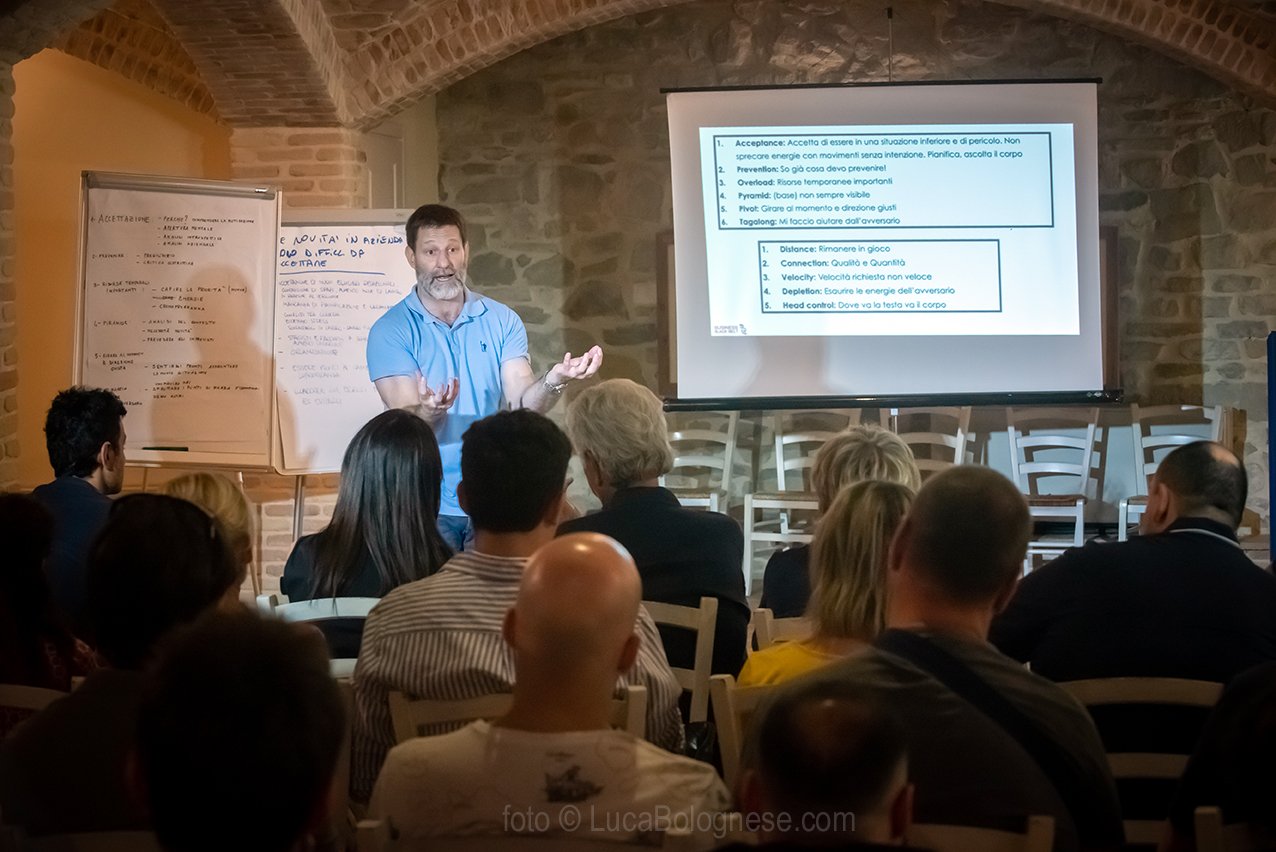
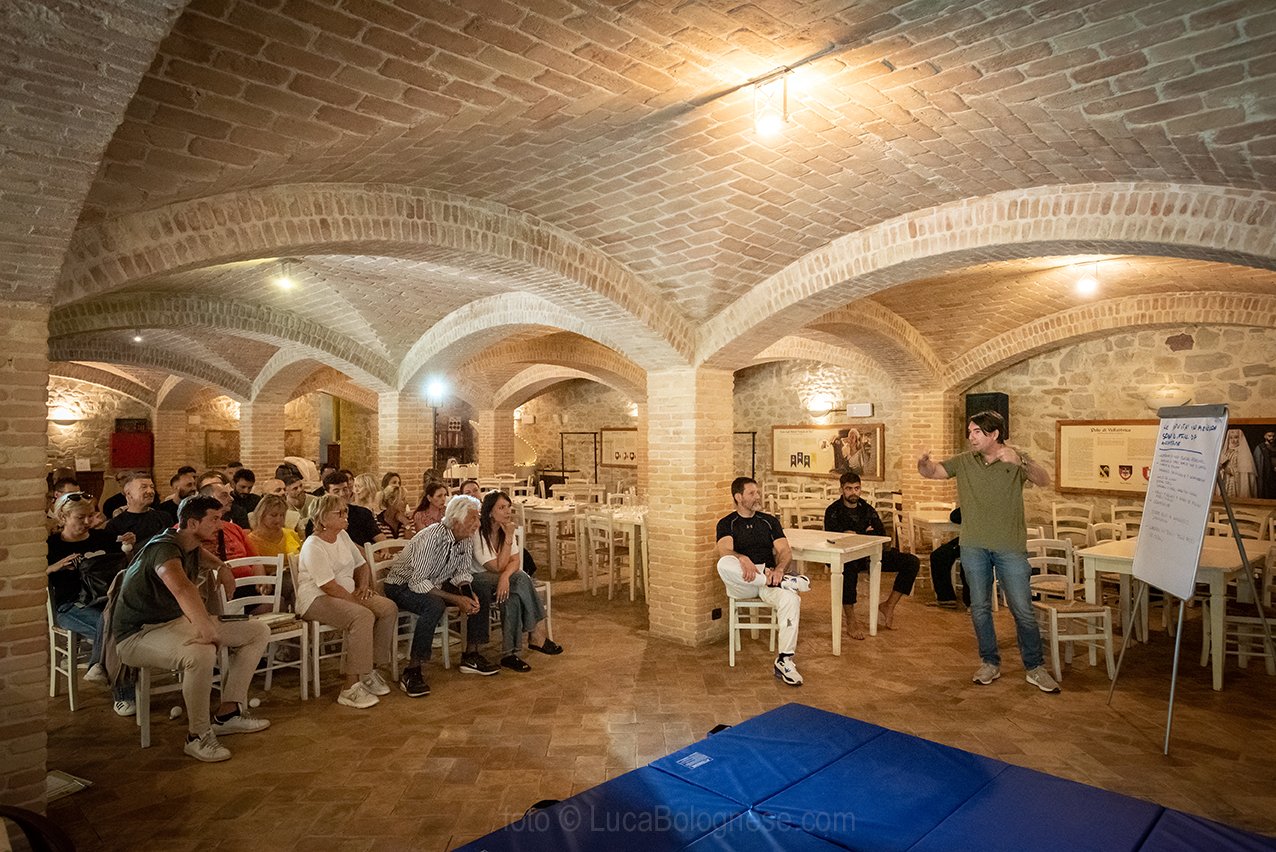
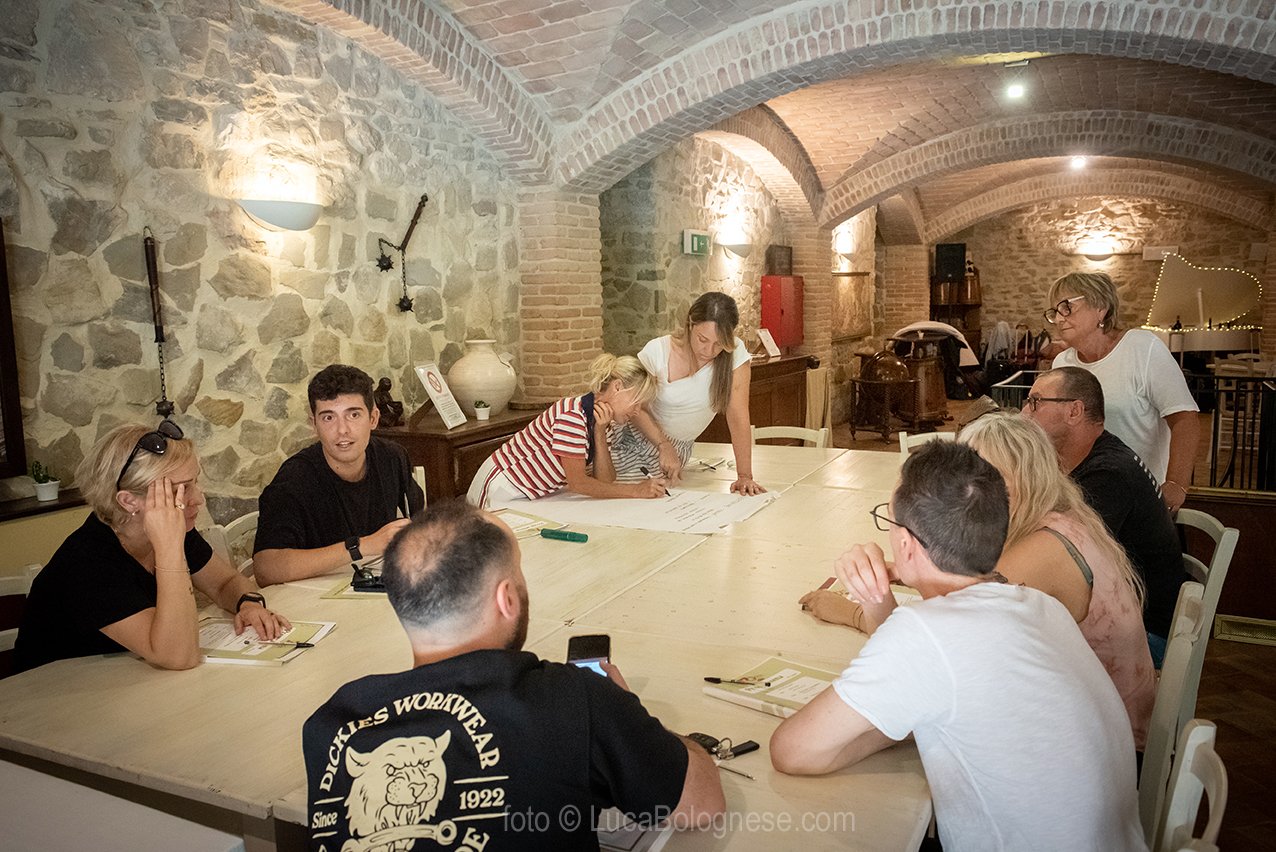
Leadership becomes visible when people have to choose, respond, collaborate and execute while the conditions are imperfect.
That is the space Black Belt Vision is designed to create. Instead of treating leadership development as a sequence of slides, concepts and generic exercises, each experience places the group inside a situation where real patterns can surface: how decisions are made, how pressure changes communication, where alignment breaks, who takes ownership, and what happens when priorities compete.
The goal is not to manufacture stress for its own sake. It is to create a safe but consequential learning environment where managers and teams can observe themselves in action, reflect on what happened and translate the insight into practical leadership behavior.
This makes the experience useful for organizations facing transformation, rapid growth, leadership transitions, cross-functional friction, new manager populations, team integration, strategy execution or the need to build a more consistent leadership language across levels.
Black Belt Vision draws on Luca Gandino's international executive background and a methodology inspired by martial arts: not as spectacle, but as a way to work with attention, discipline, leverage, adversity and decision quality when pressure rises.
The portfolio is not a menu of disconnected activities. It is a set of intervention formats designed around the moments in which leadership behavior most affects execution.
Each experience can stand alone or become the entry point to a deeper leadership journey. Scope, duration, audience and level of customization are defined after a diagnostic conversation.
For leaders who need to maintain clarity, presence and decision quality when urgency, ambiguity or business pressure increases.
For leadership teams dealing with friction, competing priorities, role ambiguity, silos or a need to rebuild shared operating agreements.
For organizations where the strategy is clear on paper but priorities, accountability and daily decisions are not consistently aligned.
For managers who need better conversations, stronger feedback, deeper listening and a practical way to develop people without taking over their work.
For international or multicultural teams that need to reduce friction, understand different leadership assumptions and create a more reliable way to work across contexts.
For corporate events that need an executive-level message with participation, relevance and a direct connection to the leadership behaviors the organization wants to activate.
For HR, L&D and executive sponsors, the fastest route to the right intervention is to begin with the business moment that made leadership development urgent.
| Business trigger | Primary audience | Best-fit experience | What the room should surface | Potential next step |
|---|---|---|---|---|
| Rapid change or sustained pressure | Executives, senior managers, critical teams | Leadership Under Pressure | Reaction patterns, decision quality, focus, emotional control and leadership presence. | Leadership diagnostic, executive coaching or deeper cohort journey. |
| New team, conflict or silo behavior | Leadership teams, cross-functional groups | Team Alignment & Trust | Hidden assumptions, role friction, confidence gaps, operating agreements and accountability. | Team alignment sprint, follow-up review and manager reinforcement. |
| Strategy is not translating into execution | Business-unit leaders, managers, transformation teams | Strategy to Execution | Priority conflicts, decision latency, unclear ownership and execution barriers. | Execution rhythm, accountability system or leadership operating model. |
| Managers need stronger people conversations | New, middle and experienced managers | Leader as Coach | Listening habits, feedback quality, ownership, questioning and performance conversations. | Practice lab, coaching reinforcement or manager development journey. |
| International teams are losing speed through friction | Global teams, regional leaders, HR | Cross-Cultural Leadership | Communication assumptions, hierarchy, trust signals, decision styles and collaboration norms. | Cross-cultural mapping and operating agreements. |
| Corporate event needs more than inspiration | Mixed corporate audience, leaders, managers | Leadership Keynote | A shared language, memorable leadership principle and a clear link to the event's business message. | Workshop, diagnostic or leadership program connected to the keynote. |
The design process protects the page from becoming a catalogue — and protects the intervention from becoming generic training.
Black Belt Vision starts by identifying the trigger, sponsor, audience, context and observable behaviors that matter. The experience is then designed backward from the business outcome and the leadership moments participants need to practice.
Clarify why this matters now, who is involved and what should be different after the intervention.
Create a scenario, sequence or experience that makes relevant leadership patterns observable.
Participants decide, act, interact and work with the pressure or constraints of the experience.
Facilitation turns action into insight by examining choices, reactions, consequences and alternatives.
Translate the lesson into language, commitments, operating choices or follow-up development.
The original Business Black Belt methodology is built around four leadership pillars. Experiences use these lenses to connect the learning moment to the decisions leaders make in real organizations.
An experience should look and feel different from a conventional training day because participants are not only receiving information — they are generating evidence about how they lead.
The exact activities vary by audience and objective. The constant is a deliberate rhythm between action and reflection, so the room never becomes activity for activity's sake.
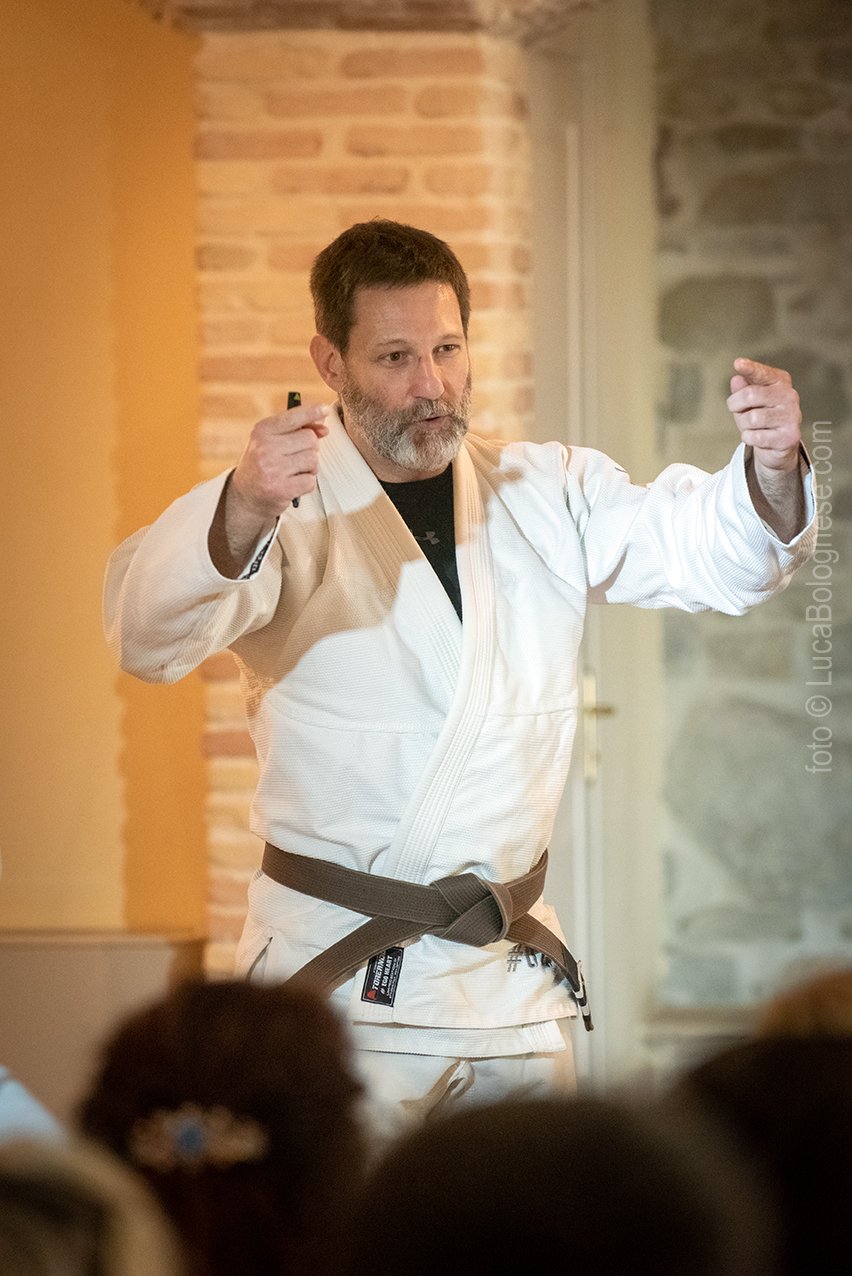
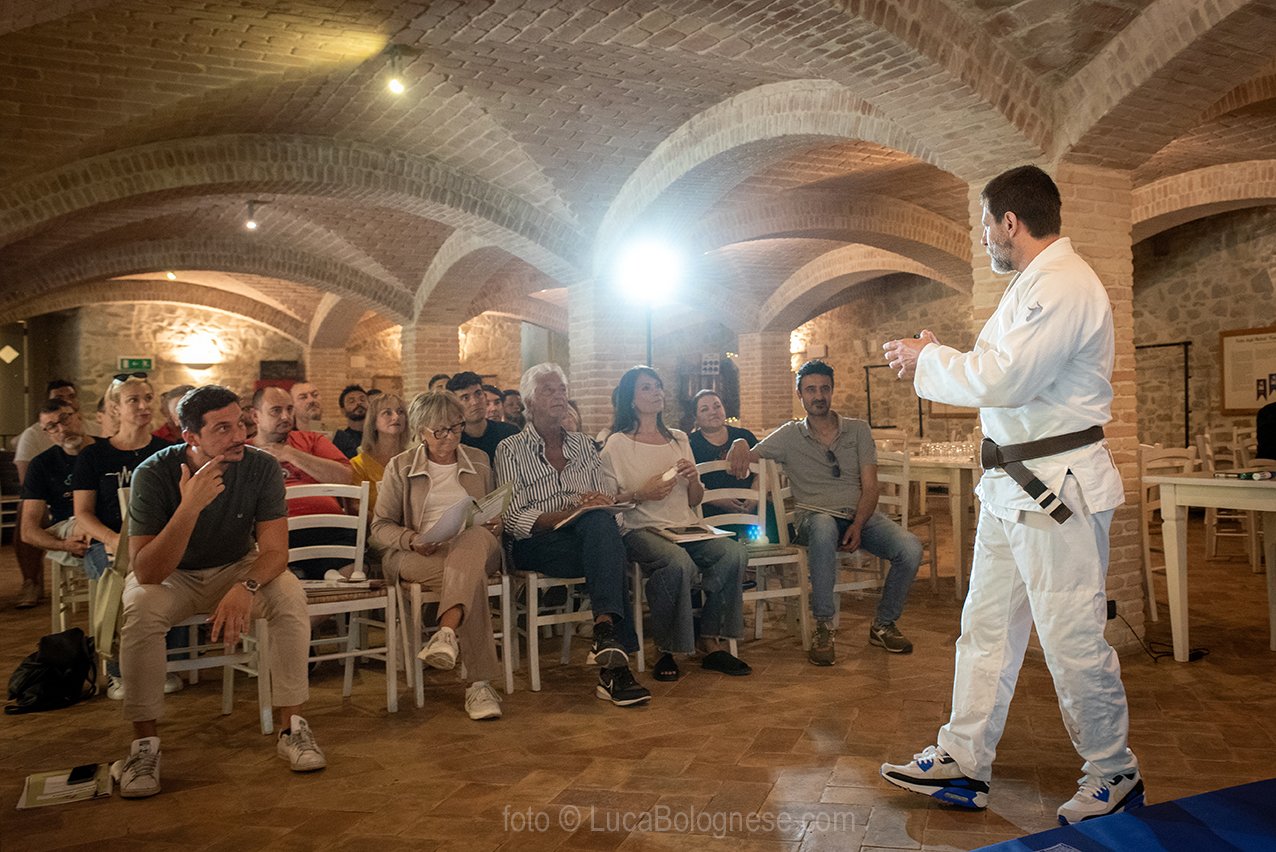
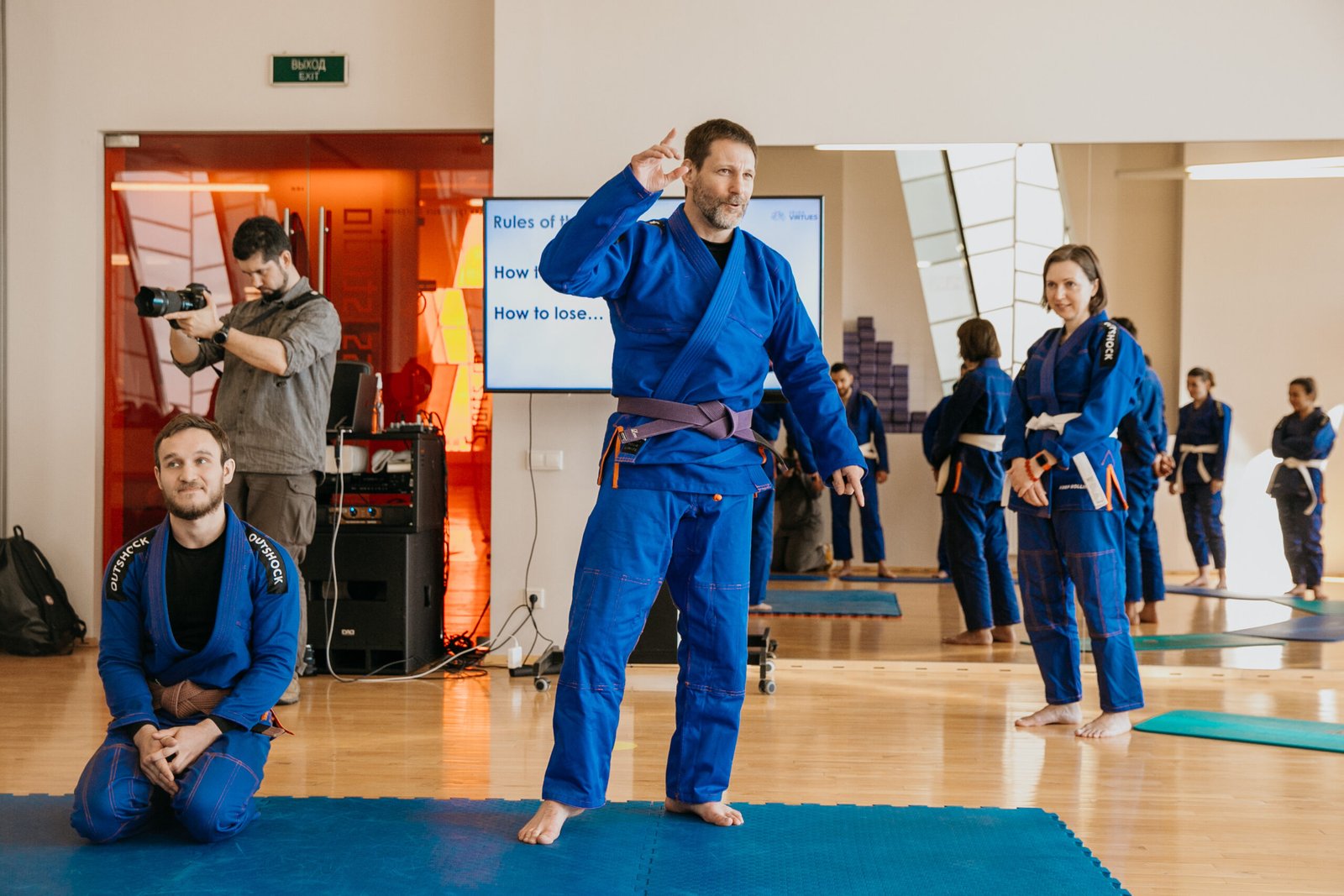
Experiential leadership training works when the design creates enough challenge to surface a pattern, enough safety to examine it and enough relevance to transfer the learning back to work.
That is why the debrief is not an afterthought. It is the point where the participant connects the moment in the room to a leadership decision, relationship or habit that exists in the business.
The graphic is illustrative rather than a performance metric: it shows the intended rhythm of a BBV experience — challenge, observation, reflection and application.
Black Belt Vision was created by Luca Gandino to connect the realities of corporate leadership with principles he learned through martial arts practice and competition.
His public profile combines executive experience with FIAT, Philip Morris, JLL and Swedish Match, work across multiple countries, authorship and university teaching, together with a competitive background in Muay Thai and Jiu-Jitsu.
That intersection matters because the experience is not built around martial arts as performance. It uses the logic behind preparation, pressure, leverage, attention and disciplined response to make leadership behavior easier to see and discuss in a business context.
The strongest leadership experiences start with clarity on the buying context. Before recommending a format, Black Belt Vision looks at the trigger, audience, sponsor, operational reality and evidence the organization will use to judge relevance.
Experiential leadership development builds capability through action, reflection and application rather than content delivery alone. Participants work through situations that make leadership behavior visible, then connect what happened to the decisions, conversations and operating realities of their role.
Traditional training often begins with concepts and then adds exercises. Black Belt Vision begins with the business moment and the behavior that needs to become visible. The experience is designed so participants have to make choices, interact and reflect on consequences, with facilitation connecting those moments back to the workplace.
No. Black Belt Vision uses principles inspired by martial arts as a leadership lens. Any physical component, if relevant to a specific design, is adapted to the audience, context and safety requirements. Prior martial arts or fitness experience is not a requirement.
Yes. Customization can include the business trigger, leadership audience, examples, language, scenarios, facilitation emphasis, format and follow-up. The right level of customization is defined in a diagnostic conversation so the experience feels relevant without turning into a company presentation.
They can be designed for executive teams, senior leaders, middle managers, new managers, cross-functional teams, international teams and corporate-event audiences. The audience changes the level of complexity, language, examples and degree of challenge.
Yes. The interaction design changes by format. In-person experiences can use the room more fully; virtual designs require tighter pacing and more deliberate interaction; hybrid experiences need special attention so remote participants are not reduced to observers.
Measurement should match the scope of the intervention. For a standalone experience, useful indicators can include relevance, participation, retention of the core leadership language and intended application. For longer journeys, measurement can extend to manager observation, behavior follow-up, assessments, business KPIs and renewal or progression criteria.
Start with a diagnostic conversation. Share the business trigger, audience, sponsor, expected outcome, timing and any constraints. Black Belt Vision can then recommend the experience architecture, level of customization and next step.
Complete the form with enough context for us to understand the challenge. A member of Black Belt Vision will review your message and respond with the most useful next step.
Your information will be used only to respond to this inquiry.